





Introduction — Dive into the heart of Diocletian’s Palace in Split
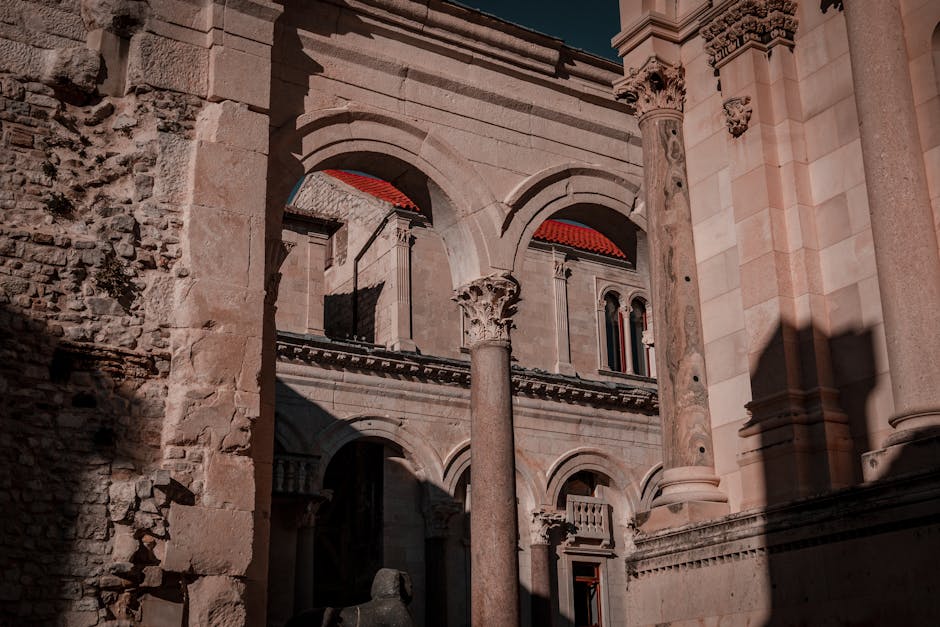
Diocletian’s Palace in Split is one of the best-preserved ancient complexes in the world and the very soul of the city. Built in the early 4th century AD as an imperial retirement for the Roman emperor Diocletian, the site evolved over centuries into a living town: medieval homes, churches, bustling narrow streets and residents who still make their lives within the ancient walls. Visiting the palace isn’t just about admiring old stones; it’s stepping into layered history where Antiquity, the Middle Ages and modern life meet in the same space.
In this practical, in-depth guide I’ll walk you through the must-see spots, give precise information (addresses, opening hours, prices in euros) and share local tips to help you get the most from your visit. Whether you have a few hours or a full day, this text will help you plan your route, skip the lines and understand the meaning behind the monuments you’ll encounter. We’ll cover the essentials: the Peristyle, the Cathedral of Saint Domnius and its bell tower, the subterranean chambers, the Golden Gate and the Riva — plus lesser-known gems like the Temple of Jupiter turned baptistery, the Vestibule, and the nearby fish market.
The palace spreads across a massive quadrangle in the center of Split, and its gates, entrances and passages often go by local names (Zlatna vrata, Sjeverna vrata, Vrata od Poljica) worth noting. The details here are meant to be genuinely useful: exact addresses (when available), price ranges converted into euros, indicative opening hours and tips to avoid crowds. I’ll also share practical advice — for example, how to book a climb up the bell tower, where to find an authentic coffee break down a palace alleyway, and what time of day offers the best light for photos.
Finally, to make this guide visual and evocative I’ve included clear image cues to help you spot the most photogenic views and the atmospheres to seek out during your visit. Whether you’re a history buff, a photographer, a family traveler or an urban explorer, this guide will take you step by step through discovering Diocletian’s Palace in Split.
1) The Peristyle (Peristil) and the Vestibule: ceremonial core and living center
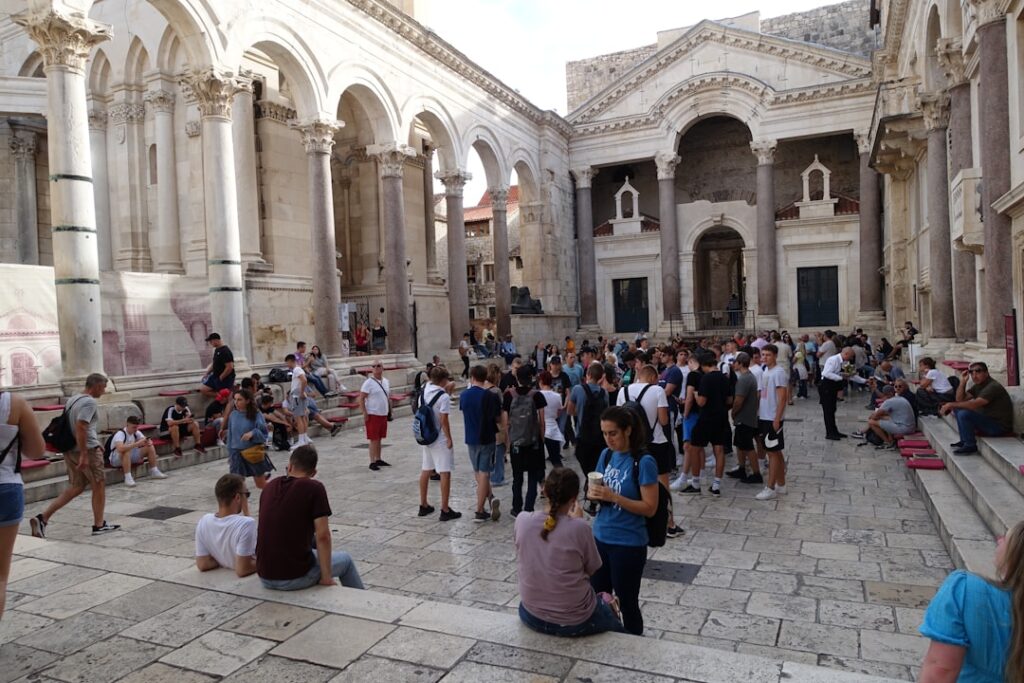
The Peristyle (Peristil) is the palace’s central courtyard, originally designed as the ceremonial space where the emperor received guests. Today, this paved square of ancient slabs is one of Split’s most photographed and busiest spots. Location: Peristil, Dioklecijanova palača, Ul. Kraj Sv. Duje, 21000 Split, Croatia. The Peristyle is open at all times and access to the courtyard itself is free, although some adjoining areas — like the bell tower climb or museum spaces — require a ticket.
The Peristyle is framed by arcades, with the Vestibule at its center — a large semi-circular antechamber that once served as the monumental threshold between the entrance and the imperial courtyard. The Vestibule, with its vaulted ceiling and stone cladding, carries your voice and creates an almost theatrical atmosphere. The space is often used for small concerts, performances and ceremonies, especially during the Split Summer Festival (Splitsko ljeto) in July and August.
Opening hours and prices: the Peristyle and the Vestibule are open continuously (free access); however, events and concerts may have tickets (prices vary from €5 to €30 depending on the program). Early morning (before 10:00) and late afternoon (after 17:00) are the best times to avoid tour groups. Local tip: sit on the Vestibule steps at sunset to watch the low light hit the columns — the marble and gilding warm to beautiful tones that photograph wonderfully.
2) Cathedral of Saint Domnius (Katedrala sv. Duje) and the bell tower: architecture and panorama
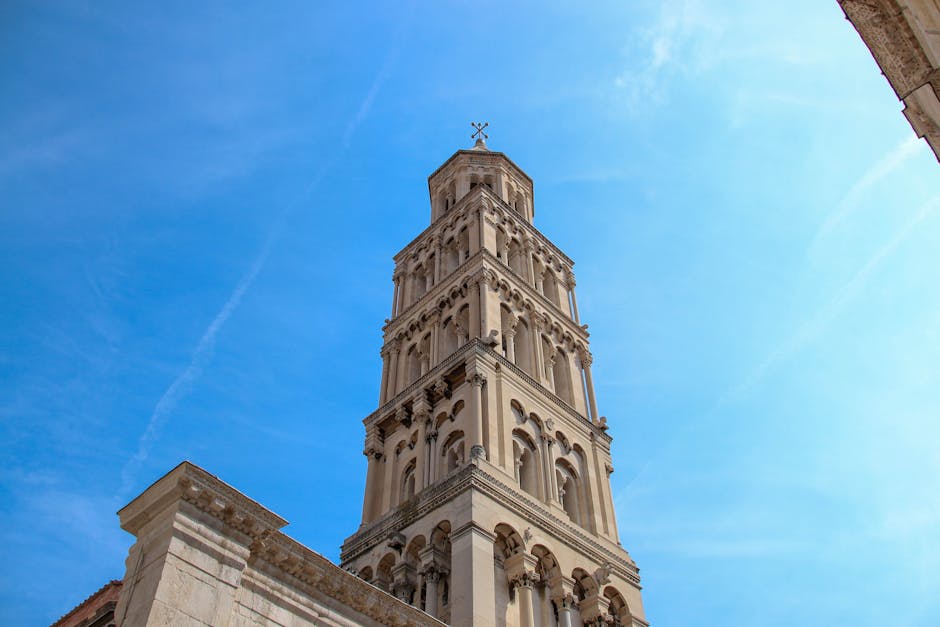
The cathedral dedicated to Saint Domnius (Katedrala sv. Duje), located at the heart of the palace, is remarkable both for its reuse of Roman elements in a Christian building and for its bell tower, which offers one of the best panoramas of Split and the Adriatic Sea. Address: Katedrala sv. Duje, Ul. Kraj Sv. Duje 5, 21000 Split, Croatia.
Opening hours: the cathedral is usually open from 09:00 to 17:00 (times may vary with seasons and religious services). Entry into the nave is often free, but access to the treasury, sacristy and the climb up the bell tower is ticketed. Indicative prices: cathedral nave: free; treasury + sacristy: ≈ €3–5; bell tower climb: ≈ €6–9. These may be combined into a single ticket available on site.
Immersive description: as you step into the cathedral you immediately notice the contrast between reused Roman columns and capitals and the medieval fittings. The crypt and the baptistery (the former Temple of Jupiter) preserve Roman sculpture and inscriptions. The climb to the bell tower involves narrow, sometimes uneven stairs — the reward is a sweeping view over red-tiled roofs, the Riva and Marjan hill. Practical tip: arrive right at opening time to climb the tower with minimal waiting; in high season access may be limited to time slots (bookings available on site or via tourist kiosks).
3) Palace basements (Basement Rooms) and the Temple of Jupiter / Baptistery
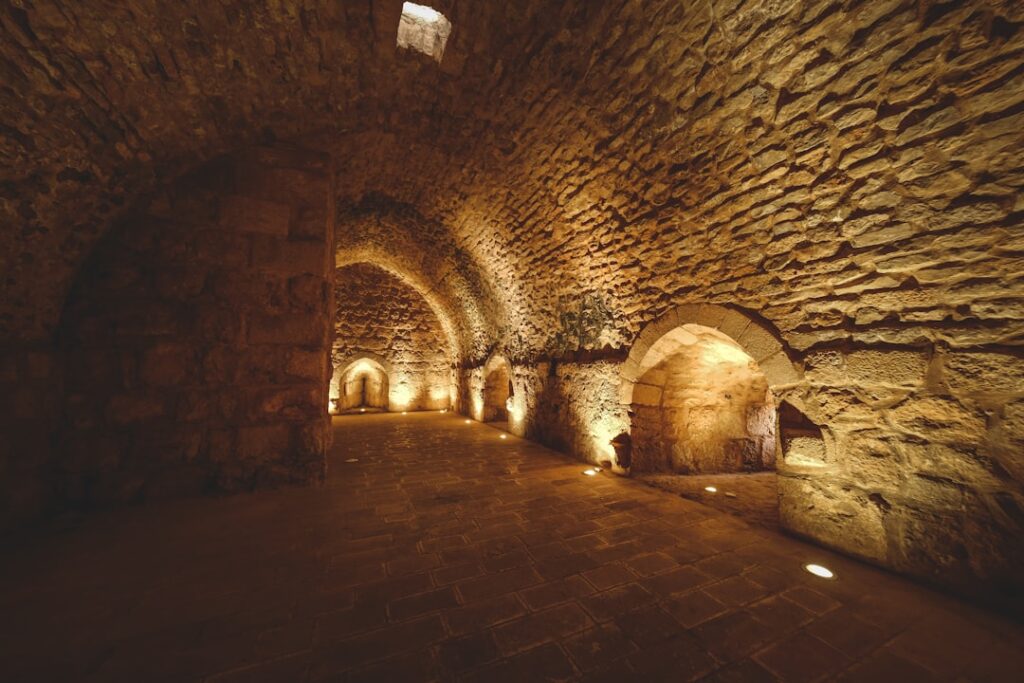
The palace basements (often called the « basements ») are among the most fascinating areas for understanding the internal arrangement of Diocletian’s Palace. These spaces, located beneath the medieval levels, are remarkably well preserved and today host temporary exhibitions and historical reconstructions. Main access address: Substructures, Ul. Kraj Sv. Duje, 21000 Split, Croatia (entry through the palace alleys near the Peristyle).
Opening hours and prices: generally open from 09:00 to 20:00 (high season), indicative tickets ≈ €6–12 for the subterranean visit (depending on exhibitions). The basements can be explored independently or with a guide. Interior lighting highlights the walls and niches that once stored goods and provisions for the emperor.
The Temple of Jupiter, found within the palace perimeter, was converted into a baptistery in the Middle Ages (Baptistery of St John). Its architecture shows religious syncretism and monumental reuse: pagan altars repurposed as Christian elements. The small chapel-turned-baptistery features reliefs and a central baptismal pool. Local tip: combine a visit to the basements and the baptistery to fully appreciate the layering of eras — allow 1 to 2 hours if you want to read the information panels and follow an audio tour.
4) Gates, medieval alleys and the Riva: movement and daily atmosphere
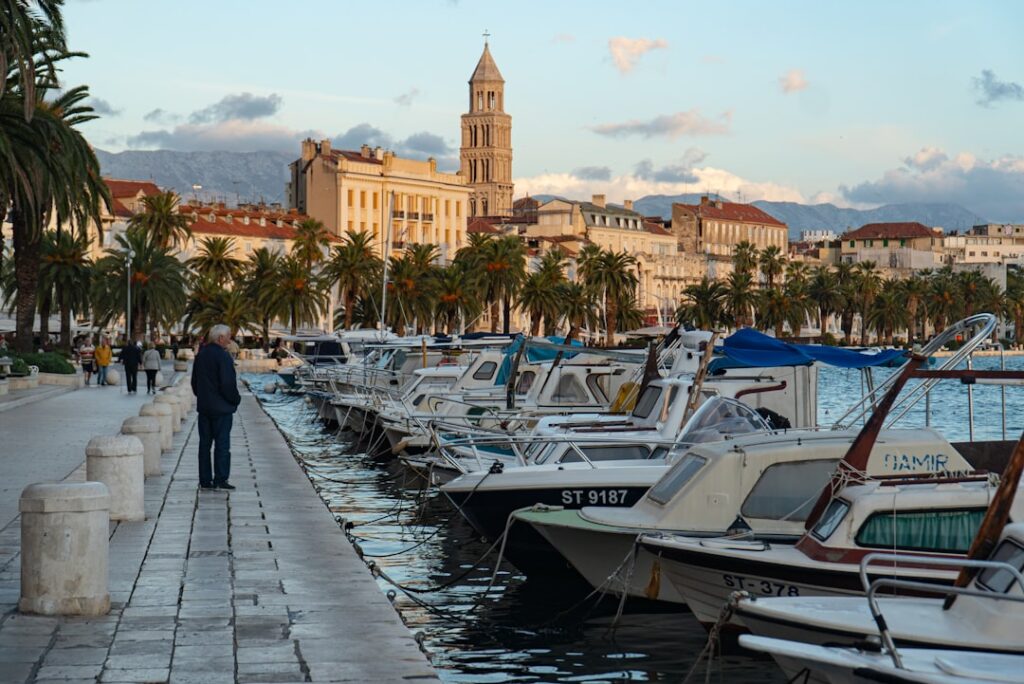
Diocletian’s Palace is not a frozen enclosure; it’s crisscrossed by narrow streets (Ulica) where craft shops, cafés and private homes sit side by side. The main gates (Porta Aurea/Golden Gate to the north, Porta Ferrea/Iron Gate, Porta Septemtrionalis/Zlatna vrata according to local names) provide access to the palace from different neighborhoods. The seaside promenade, the Riva (Obala Hrvatskog narodnog preporoda), runs alongside the palace and is a central social space.
Addresses and landmarks: Riva promenade, Obala Hrvatskog narodnog preporoda, 21000 Split, Croatia — promenade freely accessible; Golden Gate (Zlatna vrata): northern access to the palace, located near Ul. Domaldova. Interior alleys include names like Ul. Pustijerna, Ul. Papalićeva and Ul. Kraj Sv. Duje; they’re perfect if you want to get pleasantly lost.
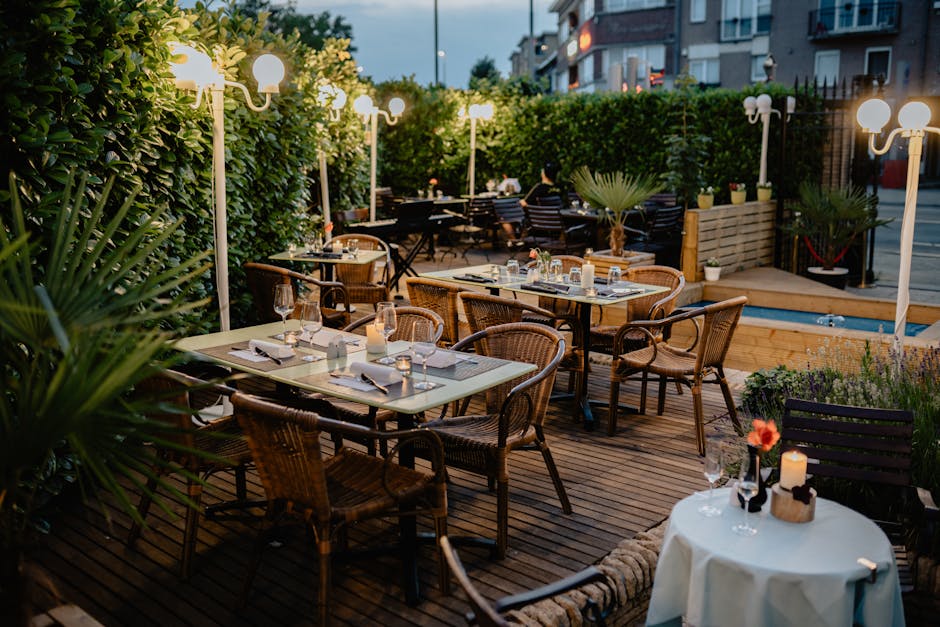
Opening hours and prices: the Riva and the alleys are open at all times (free). Shops and cafés typically run from 08:00 to 22:00 (some stay open later in high season). Local tips: for an authentic coffee, look for a small konoba or a « kavana » tucked into a side street rather than on the Riva — it’s often cheaper and more relaxed. If you’re hunting for local crafts (lavender, ceramics, coral jewelry), compare two or three shops before buying. Photo tip: soft morning light flatters the façades, while the Riva is spectacular in the golden hour with fishing boats and lively terraces.
Conclusion — Preparing your visit and final tips to make the most of it
Diocletian’s Palace is both a major archaeological site and a vibrant urban space. To enjoy it properly, allow at least two to three hours: a morning for the essentials (Peristyle, cathedral and bell tower), a visit to the basements to understand the palace’s structure, then a break on the Riva or in a side lane to soak up the local vibe. If you’re a history enthusiast, half a day or a full day will let you explore nearby museums like the Archaeological Museum of Split (Arheološki muzej u Splitu, Ul. Antuna Mihanovića 1, 21000 Split; approximate ticket €4–7; hours 09:00–17:00) and the City Museum of Split (Gradski muzej Split, Papalićeva 1, 21000 Split; similar prices).
A few practical tips before you go: buy tickets for paid attractions early in the morning if possible; most sites accept cards but carry a few euros in cash for small purchases; wear comfortable shoes as the ground is uneven and often paved; and respect places of worship during services (the cathedral remains an active place of prayer). If you visit in high season (July–August), consider a guided tour early in the day to get historical commentary and easier access to highlights.
Finally, give yourself time to wander without a strict agenda: it’s often in a narrow lane, in front of a tiny craft shop or on a shaded terrace that you’ll catch the essence of the palace — a place where centuries live side by side and every stone tells a story. Safe travels and enjoy discovering Diocletian’s Palace in Split!